

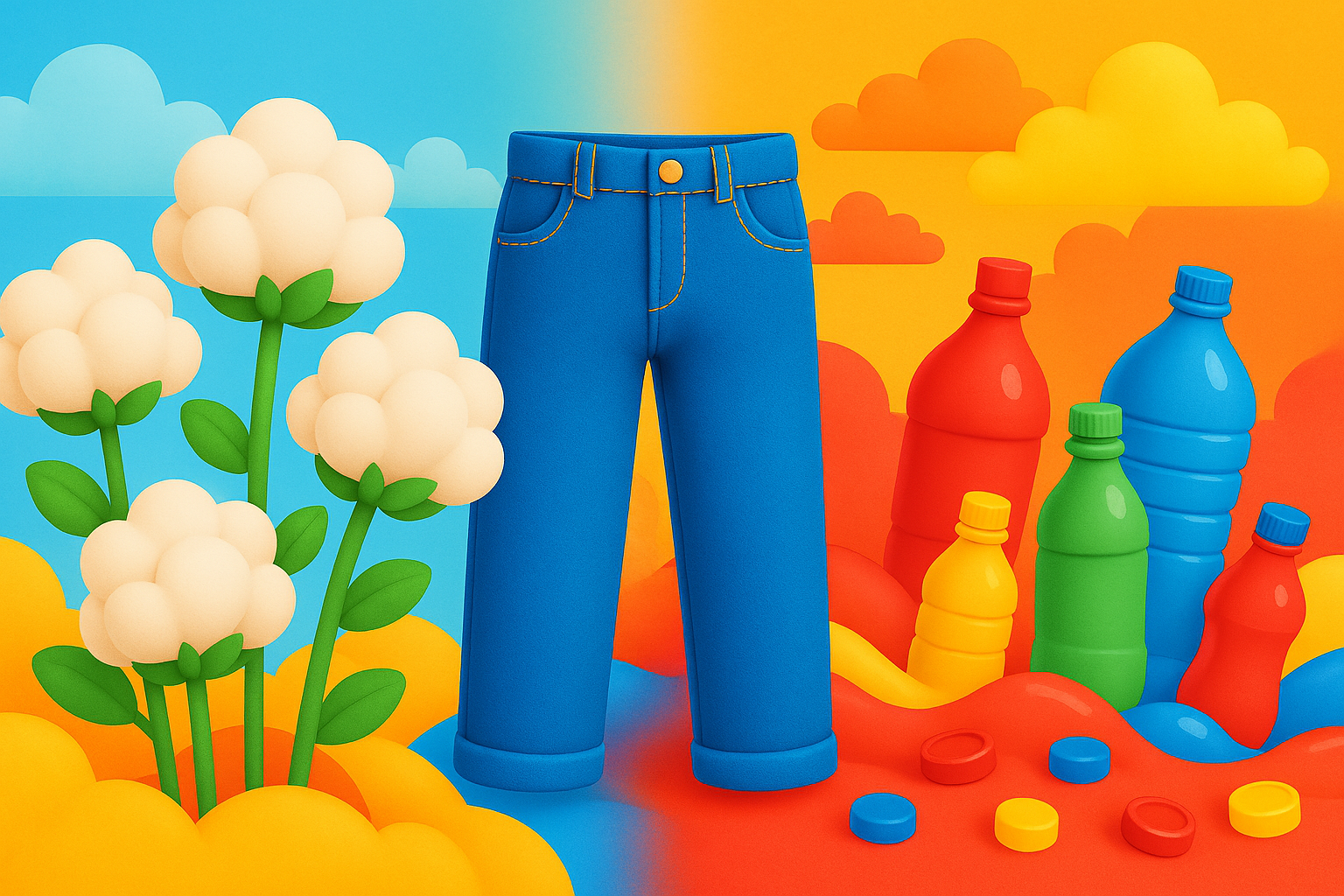
Jeans can be made from 100% cotton or from cotton blended with other fibers. Stretch denim is still denim; the useful question is what is in the fabric and how the finished pair feels on your child.
For kids who spend the day climbing, sitting on the floor and getting dressed in a hurry, fabric content is one part of the decision. The cut, waistband, seams and care instructions matter too. Here is how to compare cotton and stretch denim without relying on a brand name or a promise on the hangtag.
What is the difference between cotton and stretch denim?
Traditional denim is a woven cotton fabric. Stretch denim often includes elastane, also called spandex, to help the fabric stretch and recover. Some styles also contain polyester or other fibers. CottonWorks, Cotton Incorporated's technical resource, explains how cotton can be spun around a spandex core to make elastic denim yarn.
Both cotton denim and stretch blends come in different weights and finishes. A soft, lightweight pair and a heavier pair can have the same cotton percentage while feeling quite different. A little stretch may suit a close-fitting cut; a roomy cut can give a child space to move without relying on stretch in the fabric.
Read the fiber label, then check the whole garment
Start with the material details for the exact style and wash you are buying. These are illustrative label examples, not specifications for a particular brand:
- 100% cotton: the labeled fabric contains cotton only. That does not establish the material of every thread, pocket lining, trim or elastic waistband.
- 98% cotton, 2% elastane: a cotton-rich blend with an elastic fiber. The percentage alone does not tell you exactly how soft or stretchy the finished jeans will feel.
- 72% cotton, 26% polyester, 2% spandex: a blend with a larger synthetic-fiber component. It still contains cotton; it is not accurate to describe it as having no cotton.
Words such as “flex,” “comfort” and “easy fit” are a starting point for questions, not a substitute for the label. An easy-on waistband can be elastic even when the main denim fabric is 100% cotton. Check the lining and pocket details separately if those materials matter to you.
A stretch test is not a reliable way to identify fiber content. Some cotton fabrics gain stretch through their construction and finishing: CottonWorks describes mechanical stretch in woven cotton without synthetic fibers. If the online listing leaves the composition unclear, ask the seller for the label on that particular pair.
Choose the fit your child can move in
Try a few everyday movements: sitting cross-legged, bending the knees, crouching and reaching down. Check whether the waist digs in, the knees pull or the hem gets underfoot. For toddlers, leave room for a diaper where needed and check that the fastening works for the adult or child doing the changing.
A child who dislikes stiff fabric may prefer a softer wash or a stretch blend. Another may like a loose cotton pair. Let that response guide the choice. There is no need to make a child tolerate an uncomfortable pair because its fiber label sounds better.
If you like rolled cuffs, check the fit at the waist and seat first and keep the cuff clear of the feet. Extra length can be useful, but buying too large does not guarantee a longer period of comfortable wear.
Will 100% cotton jeans last longer?
A cotton percentage cannot promise a particular lifespan. Look at the actual garment: secure seams, the condition of the knees and seat, working fastenings and a fit that is comfortable now. A well-made stretch blend can be worth wearing and passing on; a 100% cotton label does not by itself guarantee durability.
When buying second hand, look for thinning fabric, broken stitching and a waistband that no longer holds its shape. Think about whether a small repair would make the pair useful. For cost per wear, the most helpful question is how often your child is likely to wear these jeans, not which fiber wins in the abstract.
Wash and repair according to the care label
Follow the instructions for the finished garment, including its dye, finish, trims and any stretch fibers. Do not assume that all-cotton jeans are suitable for hot washing, high-heat drying or ironing. Use the recommended washing and drying method, and check a small area before trying a stain treatment.
For a worn knee, choose a repair that suits the fabric and still lets the child bend comfortably. A rigid patch and a stretchy fabric may move differently, so test the repair or ask someone experienced in mending. Repairing a favorite pair, passing it on when it is outgrown, or buying a sound second-hand pair are practical options for getting more use from clothing.
What about sensitive skin?
For children with eczema, the American Academy of Dermatology recommends loose-fitting cotton clothing and attention to possible triggers such as dyes and laundry products. That is guidance for a specific skin condition, not evidence that every synthetic garment causes a rash or that every cotton garment is irritation-free.
Pay attention to seams, tags, tight areas and how your child feels in the finished garment. If clothing seems to trigger recurring irritation, discuss it with their clinician. A fiber label, including an organic-cotton claim, does not diagnose an allergy or guarantee a particular skin response.
Environmental claims need more than a cotton percentage
Cotton and synthetic fabrics can both shed fibers. Polyester fibers are plastic; cotton fibers are cellulose. Researchers at the University of Toronto documented denim microfibers in environments ranging from nearby lakes to the Arctic. Choosing cotton does not make fiber shedding disappear.
Nor does a cotton label tell you how quickly a finished pair of jeans will break down in a landfill or compost pile. Dyes, finishes, mixed materials and disposal conditions complicate that question. A recycled or organic ingredient also does not describe the whole garment or establish that it has a lower overall impact than another pair.
Recycling blends presents its own challenges. NC State researchers have studied separating cotton from polyester, including the extra processing needed for some dyes and finishes. Research progress does not mean every local textile collection can recycle every blend. Check what a collection service actually accepts.
For an everyday buying decision, focus on a pair that fits, will be worn and can be cared for. Keep useful clothing in use where you can, and ask for specific evidence when a seller makes a broad environmental promise.
Our Everyday Play Jean
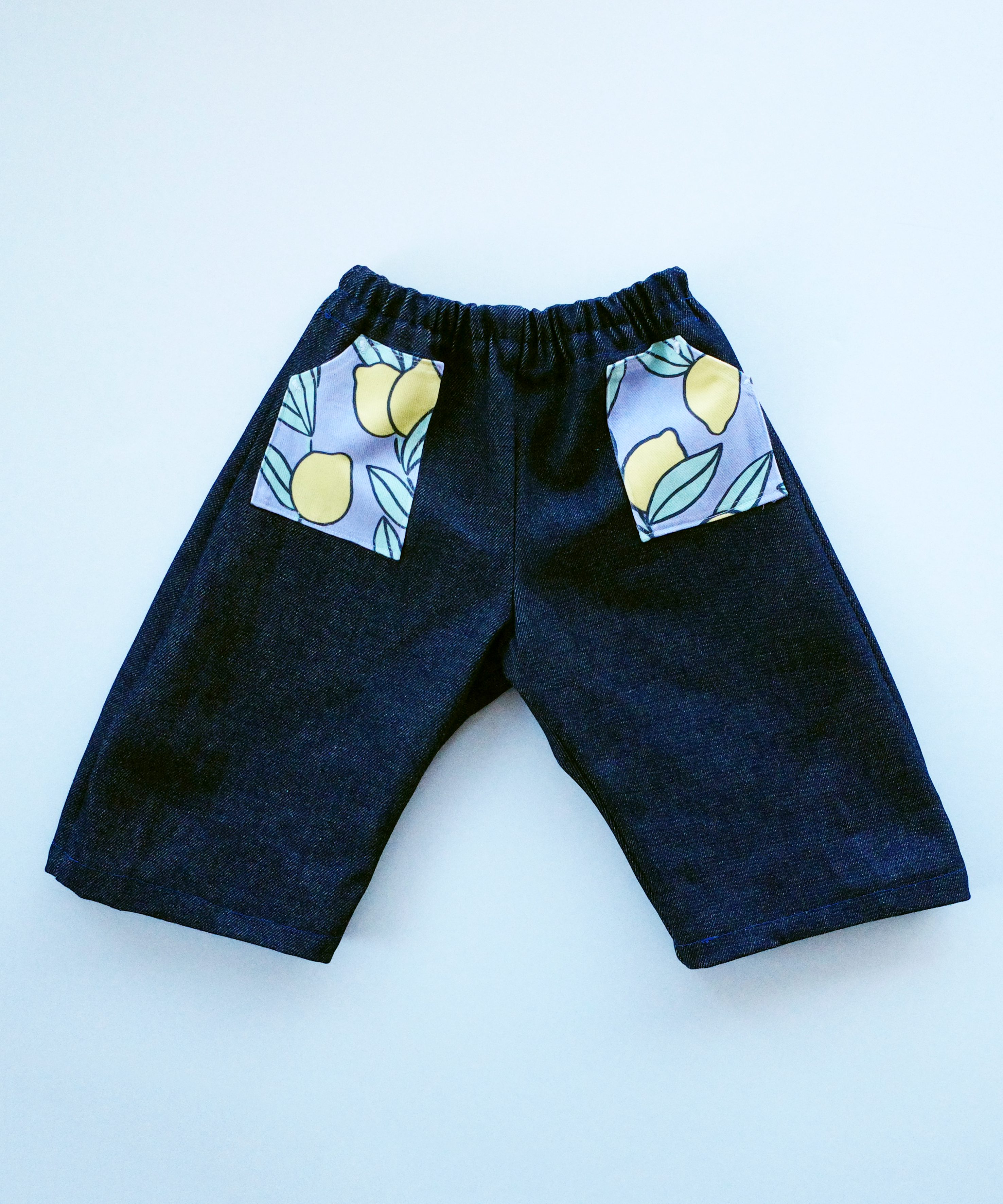
Our Everyday Play Jean with Lemon Patch Pockets uses 100% cotton denim grown and milled in the U.S. and is sewn in San Francisco. It has a relaxed fit, an elastic waist and our lemon-print patch pockets. The cotton description refers to the denim fabric, not a claim that the entire garment contains no elastic or other materials.
Check the product's size chart and care instructions to decide whether it suits your child. We hope these jeans become a familiar pair for everyday play, with room for patches and another child's adventures when the time comes.
Shop and learn about cotton denim
See how our materials move through the Colorful Bunch supply chain, explore the history of wide-leg jeans, and compare the fit and details of the Everyday Play Jean.

Leave a comment